There are no items in your cart
Add More
Add More
| Item Details | Price | ||
|---|---|---|---|

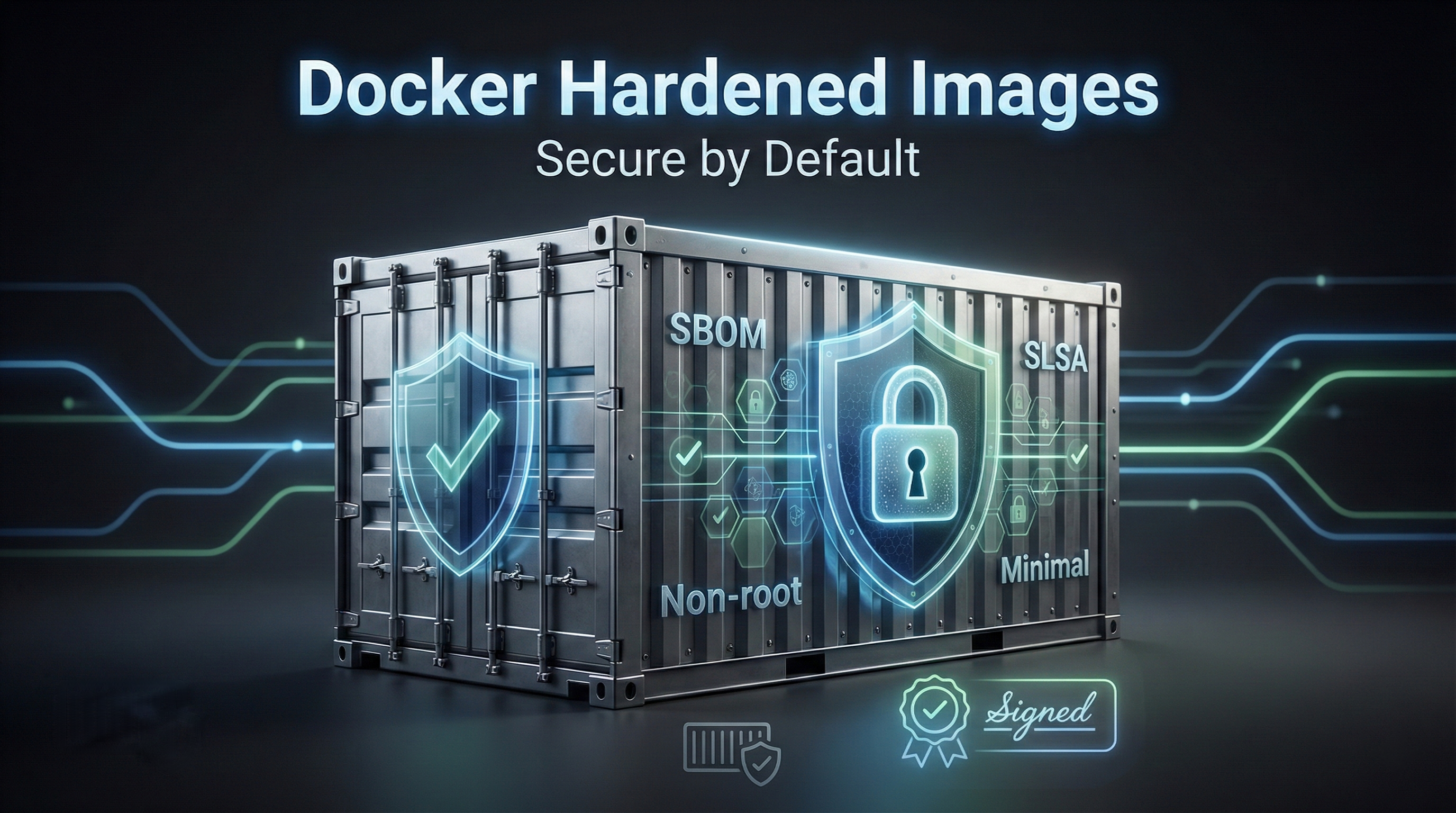
In the current era of high-frequency cyberattacks and sophisticated supply chain compromises, the "default" way of building container images is no longer enough. For years, developers have relied on standard community images that prioritize convenience over security. However, as the industry moves toward "Zero Trust" architectures, a new standard has emerged: Docker Hardened Images (DHI).
In this blog, we’ll explore the inherent security risks of standard Docker images and how DHI solves them using the Five Pillars of Supply Chain Security.
Most developers start their Docker journey with a simple FROM node or FROM python. While these images are great for getting started, they often carry a heavy "security tax":
sh, apt, curl, and wget - that your production application doesn't actually need. If an attacker gains access to your container, these tools become a "Swiss Army Knife" for lateral movement and data exfiltration.root user. If a vulnerability in your application is exploited, the attacker immediately has administrative privileges within the container, making it significantly easier to break out or cause damage.Enter Docker Hardened Images (DHI)
Docker Hardened Images are built from the ground up to eliminate these risks. They aren't just "patched" community images; they are a fundamental rethinking of how a container should behave in production. DHI follows five core pillars that transform container security:
1. Minimalism (Distroless)
DHI images are "minimalist." They contain only the application and its direct runtime dependencies. There is no shell (/bin/sh), no package manager (apt), and no unnecessary utilities. This removes the tools attackers rely on, effectively "breaking" common attack patterns.
2. Non-root Defaults
Security best practices dictate the "Principle of Least Privilege." DHI enforces this by defaulting to a non-privileged user. Even if an attacker finds a hole in your code, they are trapped in a restricted environment from second one.
3. SBOM Transparency
Every Docker Hardened Image comes with a built-in Software Bill of Materials (SBOM). This is a machine-readable inventory of every single component, library, and version within the image. It provides 100% transparency, making audits and compliance checks instant and accurate.
4. SLSA Build Level 3 Provenance
Trust is earned, not assumed. DHI images include Provenance attestations (following the SLSA framework). These are cryptographically signed records that prove exactly where the image was built, who built it, and that it hasn't been modified since. Using tools like docker scout, You can verify the image's "birth certificate" at any time.
5. Near-Zero CVEs
By stripping away the "bloat" and using curated, hardened base layers, DHI images typically ship with near-zero vulnerabilities. This allows developers to focus on securing their own code rather than chasing patches for OS-level libraries they never intended to use.
TIP
The "Near-Zero" Philosophy
In the real world, "Zero CVE" is a moving target. DHI focuses on the elimination of actionable risk. While a scan might occasionally show a legacy "Low" severity vulnerability (like a 15-year-old hardware-specific bug), the absence of Critical and High vulnerabilities means your true attack surface is effectively neutralized.
The shift to Docker Hardened Images is about more than just security - it's about velocity and trust.
Security is no longer an "afterthought" or a separate layer - it must be baked into the foundation of our infrastructure. Docker Hardened Images provide that foundation. By embracing minimalism, transparency, and cryptographic trust, DHI isn't just hardening your containers; it's hardening your entire software supply chain.
It’s time to stop building on "convenience" and start building on "hardened trust."

Amitabh Soni
DevOps Engineer Intern at TrainWithShubham